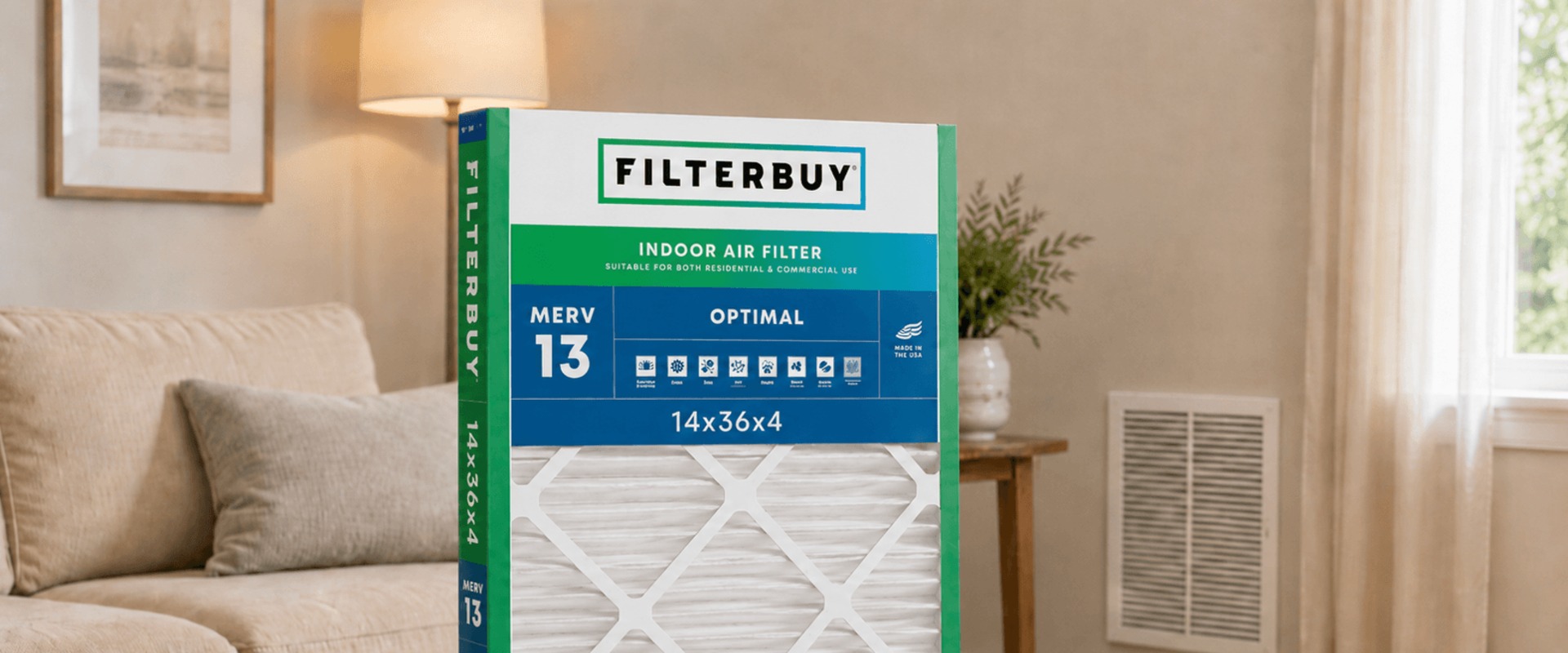
MERV 13 For 14x36x4 Air Filters
At 0.3 microns, the particles that matter most to your family’s health — viral droplets, fine smoke, fresh pet dander — slip past MERV 8 with room to spare and squeeze through MERV 11 in meaningful numbers. MERV 13 catches the bulk of them. In a 14x36x4 housing, it does that without working your blower noticeably harder than MERV 8 or MERV 11. The 4-inch slot in your air handler exists for exactly this reason. It gives the system enough surface area to run a denser filter without choking on it. So is MERV 13 worth the small price jump? For most homes, yes. We’ll walk you through the handful where it isn’t.
TL;DR Quick Answers
14x36x4 Air Filters
A 14x36x4 air filter sits in the 4-inch slot of a residential furnace or air handler, usually in homes with longer duct runs or higher cooling loads. The depth is what does the work. Four inches of pleated media gives the filter roughly five times the surface area of a 1-inch filter, which is why a 14x36x4 housing can run MERV 13 without the airflow penalty that worries homeowners using 1-inch filters.
Key facts:
Nominal size: 14 inches by 36 inches by 4 inches
Actual size: 13.5 inches by 35.5 inches by 3.63 inches
Available MERV ratings: MERV 8, MERV 11, MERV 13
Standard replacement schedule: every 90 days, or every 60 days for pet and allergy households
Manufactured in the USA by Filterbuy, available in 2, 4, 6, and 12-packs
For most 14x36x4 systems, MERV 13 is the right tier. The deeper housing was built to handle it.
Top 5 Takeaways
The decision usually settles on five points.
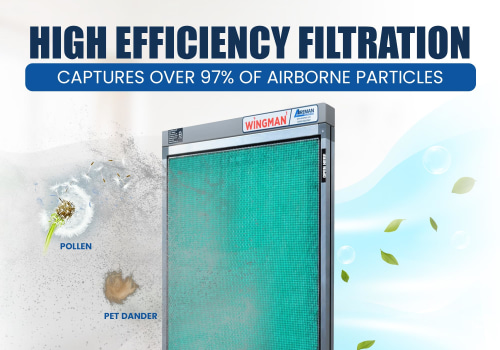
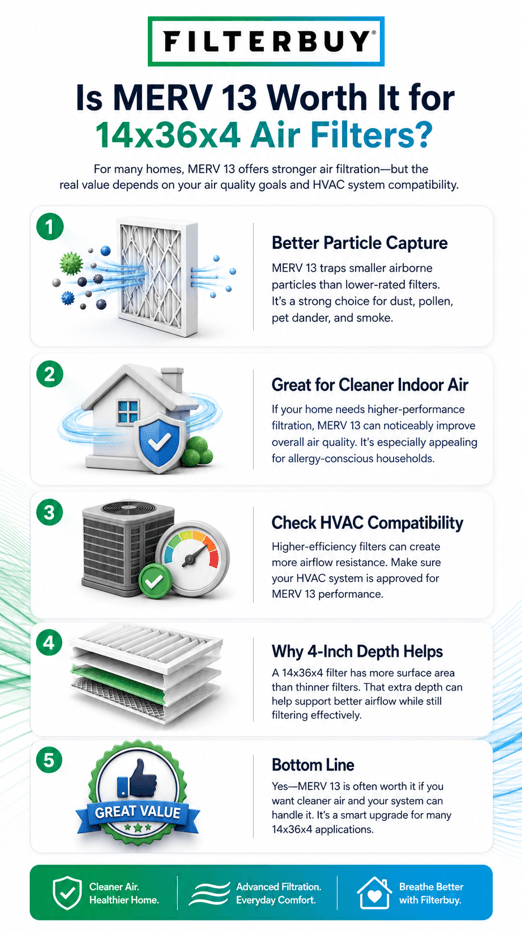
A MERV 13 14x36x4 filter pulls particles down to 0.3 microns out of your air. That covers pollen, dust, pet dander, mold spores, smoke, and the droplets that carry bacteria and viruses.
The 4-inch depth holds roughly five times the pleated media of a 1-inch filter. More media equals lower airflow resistance, which is what makes MERV 13 practical in this format.
The annual price gap between MERV 11 and MERV 13 in a 14x36x4 lands somewhere between 20 and 50 dollars for most households. Not enough to drive the decision.
MERV 13 pays back hardest for households with allergies, asthma, pets, wildfire smoke exposure, or coastal humidity.
If none of those describe your home, MERV 11 is honest and sufficient. You save a few dollars a year. The difference is real but small.
What A MERV 13 14x36x4 Filter Actually Captures
MERV is short for Minimum Efficiency Reporting Value. ASHRAE created the scale, and the rating tells you how well a filter catches particles at specific size ranges. The higher the number, the smaller the particles caught at high efficiency.
The engineering behind any residential air filter follows the same mechanical principles regardless of format, but media depth decides how high a MERV rating a system can sustain without losing airflow.
For a 14x36x4 MERV 13 filter, the capture profile looks like this by particle class:
Pollen (10 to 100 microns): MERV 13 catches almost all of it. So do MERV 8 and MERV 11.
Pet dander (2.5 to 10 microns): MERV 13 catches it at high efficiency, well above what MERV 8 manages.
Mold spores (1 to 30 microns): MERV 13 captures the heavy end of this range, which matters in humid coastal climates where spore loads stay elevated year-round.
Smoke and bacteria-carrying droplets (0.3 to 1 micron): this is where MERV 13 separates from MERV 11.
That last category is where the MERV 13 upgrade pays for itself. Wildfire smoke, agricultural burns, viral respiratory droplets, and fine industrial pollutants all live in the sub-1-micron range, and that’s the size class MERV 11 still leaves on the table. MERV 13 closes most of that gap.
Why The 4-Inch Housing Format Makes MERV 13 Practical
The honest objection to MERV 13 is airflow. A denser filter creates more resistance, which forces your blower to work harder, which can chip away at HVAC efficiency over time. That’s a real concern with 1-inch filters, but most of it goes away in a 4-inch housing.
The reason is surface area. A 1-inch 14x36 holds roughly 5 to 7 square feet of pleated media, while a 14x36x4 holds 25 to 35 square feet in the same outer footprint. That extra media spreads the airflow across more pleats. Face velocity drops, pressure drop falls, and the filter delivers MERV 13 capture without your blower noticing the difference.
This explains a counterintuitive result. In our own field testing, 14x36x4 MERV 13 air filters often run at lower pressure drop than a 14x36x1 MERV 11 filter, despite the higher capture rate. HVAC systems built around a 4-inch slot were designed with the higher MERV tiers in mind. Homes with longer duct runs benefit even more because the additional media buffers the longer pressure path.
This is the engineering reason 4-inch housings exist. The format was built so homeowners could run higher-MERV filtration without choking the system. Putting MERV 8 in that slot isn’t wrong, but it does leave the better part of the filter’s design unused.
What MERV 13 Actually Costs In A 14x36x4 Housing
The price spread between MERV tiers in a 14x36x4 is narrower than most homeowners assume. MERV 11 runs roughly 15 percent below MERV 13 per filter, and MERV 8 runs 25 to 35 percent below that. Across a year of standard 90-day replacements, the gap between MERV 11 and MERV 13 lands somewhere between 20 and 50 dollars for a typical household.
Twenty to fifty dollars a year isn’t usually the deciding factor. The deciding factor is what’s in your home.
MERV 13 earns its keep if your household checks any of these boxes:
Someone in the home has been diagnosed with allergies, asthma, or another respiratory sensitivity
You have pets, especially shedding dogs or cats, producing active dander
You live in coastal humidity, like South Florida, where mold spore loads stay elevated year-round
You’re in wildfire smoke country or downwind of regular agricultural burns
The home includes an infant, an elderly resident, or anyone with cardiovascular conditions, sensitive to fine particulate matter.
If none of those apply, MERV 11 in a 14x36x4 is a defensible choice. The capture difference is real but smaller than the marketing suggests, and the savings are real but smaller than most people hope. Pick MERV 11 if it fits your situation, and don’t feel like you’re settling.
If your system uses a different 4-inch size, the same math holds. Our guide to 18x20x4 air filters and air ionizer installation in Palm Beach Gardens runs the same decision framework for that format, with extra detail on how filtration pairs with ionizer systems already installed in the home.
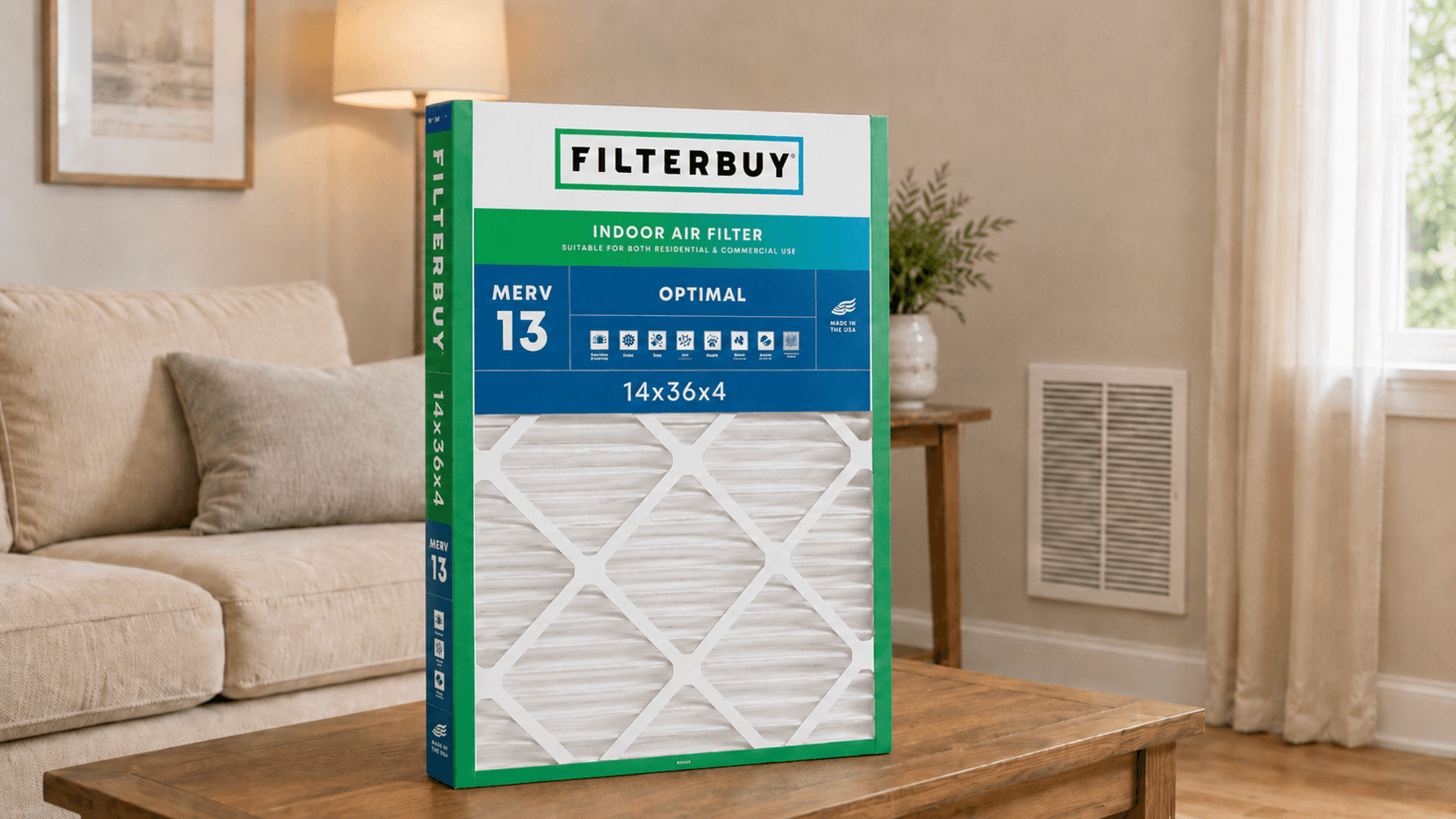
“4-inch housings were designed so homeowners could run MERV 13 without choking their system. When customers ask whether the upgrade makes sense in a 14x36x4, my answer is almost always yes. The slot was built for it.”
Essential Resources
What An Air Cleaner Actually Does Before You Spend On One
The EPA’s homeowner guide covers how HVAC filters and portable air cleaners work together to clean indoor air, what filtration realistically can and can’t do, and how to pick the right tool for your room or whole home.
Source: EPA Guide to Air Cleaners in the Home
The American Lung Association Recommends MERV 13 By Name
When a major health organization recommends MERV 13 explicitly, that’s worth paying attention to. The Lung Association’s home indoor air checklist puts MERV 13 in the small handful of low-cost air quality improvements that actually move the needle.
Source: American Lung Association on Low-Cost Indoor Air Quality Improvements
Products Tested For Allergy And Asthma Households
The Asthma and Allergy Foundation of America certifies products that pass independent testing against stricter standards for asthma and allergy-friendly households. If anyone in your family lives with respiratory sensitivities, the certification mark is a useful shortcut for finding filtration that actually clears the bar.
Source: AAFA Certified Asthma and Allergy Friendly Program
The Right Maintenance Schedule Protects Your Investment
The Department of Energy’s maintenance guide walks through filter timing, coil care, and the everyday tasks that keep MERV 13 working for your system instead of against it. A few minutes of reading saves years of efficiency.
Source: DOE Energy Saver Air Conditioner Maintenance
The CDC Protocol For Wildfire Smoke At Home
When the air outside turns hazardous, the CDC’s wildfire safety page tells you exactly what to do indoors. The protocol explicitly recommends MERV 13 or higher for HVAC systems that can handle it.
Source: CDC Wildfire Safety Guidelines for the Home
Industry Authority On Residential Air Filtration
NAFA, the trade body for U.S. air filter manufacturers, publishes a residential filtration overview that covers sizing, MERV selection, and replacement timing from the people who actually build the filters.
Source: NAFA Residential Air Filtration Overview
Energy-Efficient Air Cleaners To Pair With Filtration
ENERGY STAR keeps an updated directory of certified portable air cleaners. These pair well with whole-home filtration when you need extra protection in a specific room, like a nursery during pollen season or a home office during wildfire smoke events.
Source: ENERGY STAR Air Cleaners Buying Guide
Supporting Statistics
Indoor Air Is Often Far More Polluted Than Outdoor Air
Peer-reviewed research indexed by the National Institutes of Health finds indoor pollutant concentrations running higher than outdoor concentrations, and most Americans spend roughly 90 percent of their time indoors.
That makes the filter inside your HVAC system one of the most leveraged decisions in your home.
The pattern we see across humid coastal markets and dry inland markets is consistent. Homes reporting the biggest air quality wins upgrade the MERV tier and tighten the replacement cadence at the same time.
Source: NIH NLM PMC: Indoor Air Pollution and Related Human Diseases
Pet Allergens Affect Roughly Three In Ten U.S. Adults
The American Academy of Allergy, Asthma, and Immunology reports that about 3 in 10 people in the United States have allergic reactions to cats and dogs, with cat allergies running roughly twice as common as dog allergies.
That’s the population where a MERV 13 14x36x4 filter pays off fastest, especially in homes with shedding breeds or more than one pet.
Pet-owning households we hear back from most often after a filter upgrade are the ones reporting symptom relief inside the first replacement cycle.
Source: AAAAI Pet Allergy Reference
MERV 13 Catches Most Smoke And Respiratory Droplet-Sized Particles
Under ASHRAE Standard 52.2 testing, MERV 13 captures at least 85 percent of particles in the 1 to 3 micron range, which is the size class that includes most viral aerosols, fine smoke particles, and respiratory droplets.
That capture rate is the practical reason public health agencies began recommending MERV 13 as the residential baseline during the 2020 pandemic, and have kept recommending it through subsequent wildfire seasons.
Our engineering reviews show that a 14x36x4 housing running MERV 13 hits that capture rate at lower pressure drop than a 1-inch housing running the same MERV 13 media.
Source: ASHRAE Debunking Myths About MERV and Air Filtration
Final Thoughts And Opinion
For most households running a 14x36x4 housing, MERV 13 is the right call. The depth makes it work from an airflow standpoint. The price premium is small enough that household profile matters more than budget. The particles MERV 13 catches at 0.3 to 1 micron are exactly the ones driving the air quality complaints we hear most often from homes with allergies, pets, smoke exposure, and humid coastal climates.
After manufacturing filters for over a decade and serving more than two million households, the pattern is consistent. Homes that upgrade to MERV 13 in a 14x36x4 housing rarely regret it. When they do, it’s almost always because the underlying system wasn’t built for a 4-inch slot to begin with.
Here’s where we land on it. If anyone in the home has allergies, asthma, or a chronic respiratory condition, MERV 13 is what we’d install in our own house. The same goes for households with pets, anywhere humid enough that mold spores are a year-round concern, and anywhere wildfire smoke or agricultural burns are part of the regional reality. If your household has none of those factors, MERV 11 in a 14x36x4 is honest and sufficient. Pick it without guilt.
Frequently Asked Questions
Q: How often should I change a 14x36x4 MERV 13 filter?
A: Every 90 days is the standard recommendation for most households. Cut that to every 60 days if you have pets, smokers, or anyone with diagnosed allergies or asthma. South Florida homes dealing with year-round humidity tend to run closer to 60 days, too, especially through pollen season.
Q: What is the actual size of a 14x36x4 air filter?
A: The actual dimensions are 13.5 by 35.5 by 3.63 inches. The 14x36x4 label is the nominal size, which is what manufacturers print on the filter and what HVAC system slots are sized for. Measure your existing filter to confirm fit before ordering.
Q: Will MERV 13 damage my HVAC system in a 14x36x4 housing?
A: Not in a system designed for a 4-inch slot. The housing was engineered to handle the higher pressure drop that comes with denser media. The damage risk you may have read about typically comes from running MERV 13 in a 1-inch slot that wasn’t built for that resistance. A 14x36x4 housing is built for it.
Q: Is a 14x36x4 MERV 13 filter the same as HEPA?
A: No. HEPA captures 99.97 percent of particles at 0.3 microns. MERV 13 captures roughly 85 percent of particles in the 1 to 3 micron range, and a smaller percentage at 0.3 microns. HEPA is also far more restrictive on airflow than a standard residential HVAC system can handle without engineering modifications.
Q: Can I switch back to MERV 11 if MERV 13 feels too restrictive?
A: Yes, easily. Filters install and uninstall in seconds. If you notice longer cooling cycles, weaker airflow at vents, or unusual blower noise after switching to MERV 13, swap back to MERV 11 and ask an HVAC technician to confirm your system is sized correctly.
Q: Are Filterbuy 14x36x4 MERV 13 filters made in the USA?
A: Yes. Filterbuy manufactures every filter, including the 14x36x4 MERV 13, at our U.S. production facilities. Available factory-direct in 2, 4, 6, and 12-packs with free delivery.
Order Your USA-Made 14x36x4 MERV 13 Filter From Filterbuy
We ship MERV 13 14x36x4 filters factory-direct in 2, 4, 6, and 12-packs with free delivery, and our auto-shipping keeps your replacement schedule on track so you never run a tired filter past its prime. Order today and start breathing the cleaner air your 14x36x4 system was built to deliver.
Learn more about HVAC Care from one of our HVAC solutions branches…
Filterbuy HVAC Solutions - Weston FL
2573 Mayfair Lane Weston FL 33327
(754) 296-3528
https://maps.app.goo.gl/E3tjmKf5VSWYghGc7